







Types of Label Printers
Types of Label Printers: A Brief Overview
Label printers are conventionally divided into several categories. The main characteristics that distinguish them include printing technology, application area, and connectivity options.
In this article, we will explain what types of label printers exist.
1. Printers by Label Printing Technology
Direct Thermal Printers use direct thermal printing technology. Text and images are applied to labels by heating the thermosensitive layer of the paper.
Advantages:
● affordable printing cost;
● no additional consumables required.
Disadvantages:
● short lifespan of thermal labels- up to 1 year;
● image quality up to 300 dpi;
● only black-and-white printing is possible.
Applications: logistics, retail, transportation, hospitality, finance, entertainment, healthcare.
Thermal Transfer Printers apply information to labels through thermal transfer. This method uses additional consumables- ribbons. They transfer ink onto labels and allow for color printing.
Advantages:
● print quality up to 1,200 dpi;
● durable and long-lasting printed materials- up to 25 years.
Disadvantages: higher label cost due to ribbon use.
Applications: manufacturing, healthcare, retail, transportation, logistics.
2. Printers by Application Area
Entry-level printers print up to 5,000 labels per shift. These compact and easy-to-maintain printers are used for low and medium print volumes.
Commercial desktop printers produce up to 15,000 labels per day. They feature enhanced functionality, come with additional accessories, and support both wired and wireless interfaces for connecting to PCs and peripherals.
Applications: offices, stores, small and medium warehouses.
Industrial printers are powerful and fast models designed for high-volume printing. They are durable, reliable, and often built with wear-resistant metal housings. They offer extensive functionality and additional hardware options such as displays, built-in memory modules, and more.
Applications: large-scale manufacturing, logistics, transportation, retail.
Mobile or Bluetooth printers are lightweight and portable, often worn on a belt. They run on batteries and are best suited for relabeling and repricing. They integrate seamlessly with Android devices.
Applications: warehouse inventory, in-store operations, delivery services.
3. Label Printers by Connectivity
- Wired printers connect to computers and other devices via USB, Ethernet, or RS-232 interfaces.
Advantages: stable connection.
Applications: any stationary workstation.
- Wireless printers connect to control devices and peripherals via Wi-Fi or Bluetooth networks.
Advantages: mobility and convenience when working in different areas of a store or warehouse.
Applications: warehouse operations, retail, delivery services, and more.
4. Which Label Printer to Choose for Retail: Printing Method
A thermal printer produces labels using direct thermal printing technology. Its advantages include the low cost of label production, as no additional consumables are required. Disadvantages:
- print quality- the maximum resolution of a thermal printhead is 300 dpi;
- thermal printers produce print only black-and-white labels- color printing requires ink ribbons.
A thermal printer is suitable for labeling perishable food products and other fast-moving goods. Thermal labels are made from regular paper with a special heat-sensitive chemical coating. Their lifespan ranges from 6 months to 1 year.
A thermal transfer (TT) printer can print very high-quality labels- up to 1,200 dpi. Its advantages include brightness and excellent readability of text and images. The ink ribbon enables printing in various colors. Ribbons can be black, white, red, green, blue, yellow, purple, gold, or silver.
The lifespan of a thermal transfer label can reach 25 years. Materials used include paper, cardboard, polyethylene, polypropylene, and textiles such as satin. TT labels are resistant to:
● chemicals and direct sunlight;
● temperature fluctuations;
● moisture.
This allows you to label products with long storage periods without worrying about premature label degradation. For example, thermal transfer labels can be applied to expensive linens, toys, and even artwork. Only TT printers can produce textile tags used for shoes, clothing, and natural fur.
Thermal transfer printing is more expensive than direct thermal printing because ribbons are required. However, a TT printhead lasts twice as long as a thermal printhead.
5. Performance and Other Characteristics
A key characteristic of any retail device is performance, and printers are no exception. This parameter determines the class of the equipment.
Entry-level printers are suitable for small warehouses and can print up to 5,000 labels per shift. Their maximum printing speed is 152 mm/s. The printed text and images do not exceed 300 dpi in quality. Typically, these capabilities are enough for a large pickup point or a small online store.
Entry-level printers are easy to install and set up, requiring no special skills. However, their functionality is limited. For example, the device is usually connected to a computer only via USB.
Bluetooth or mobile printers are also entry-level devices. They integrate easily with any Android device, including data collection terminals, POS systems, and electronic scales. Even a smartphone can be used to operate a mobile printer.
Bluetooth printers are excellent assistants for repricing in the retail sales floor. They help quickly update labels and price tags. They are equally useful in warehouses or pickup points when rapid relabeling is required. This is why mobile printers are among the most popular devices for sellers working in retail.
For medium and large companies operating in retail, commercial printers are the right choice. They can print up to 15,000 labels per day. Mid-range desktop solutions are suitable for warehouses and large pickup points and can support multiple small retail locations.
Mid-range printers also provide extended functionality. They usually come with label design software and useful accessories such as dispensers, label cutters, external roll holders, or rewinders.
Commercial printers are often used as part of a POS system:
● as part of a weighing system;
● as devices for printing both labels and receipts;
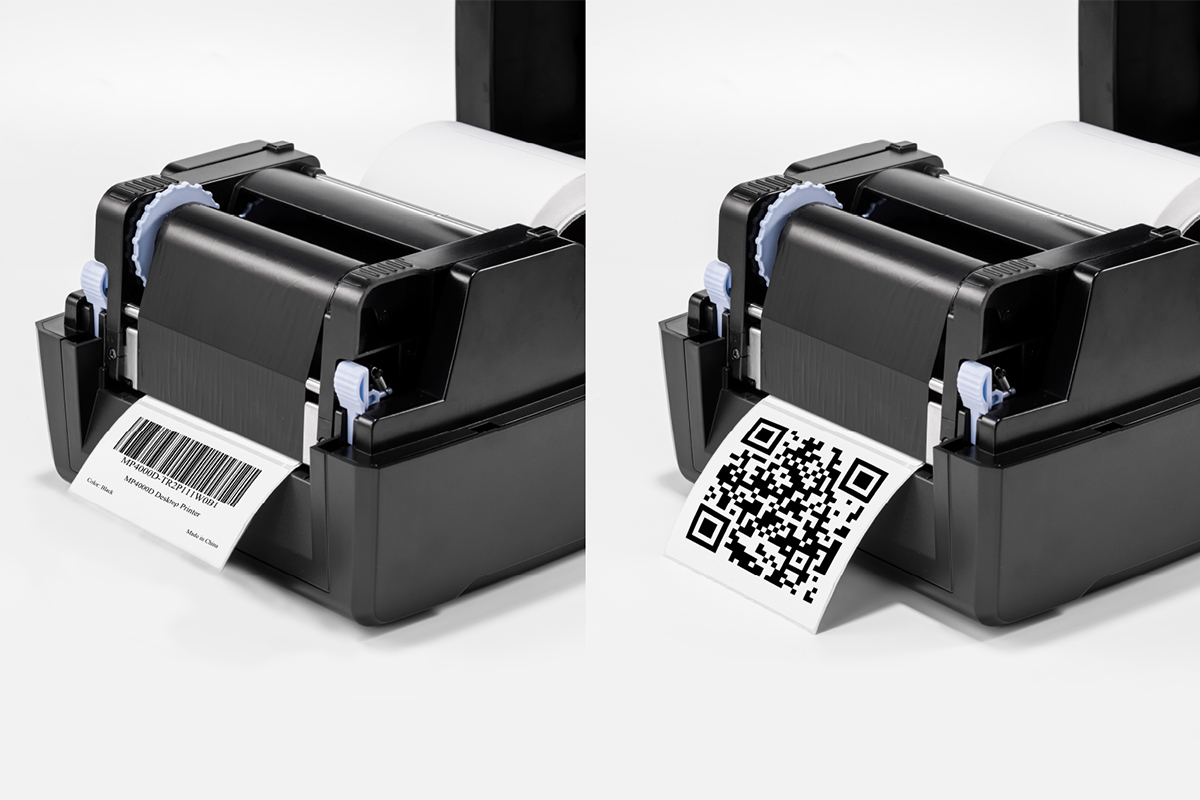
● for marking products with Data Matrix, EAN, UPC, GS, QR Code and others popular barcodes;
● for many other tasks.
Connectivity options may include wired or wireless interfaces. Many mid-range models support Ethernet for local network integration, making them both functional and convenient.
Industrial Printers
Industrial models offer the highest productivity. Daily output can reach 20,000 labels. These printers are used in large enterprises and manufacturing environments. For example, an industrial printer can automate a logistics center or a transport terminal.
Advantages of industrial equipment include:
● support for standard and rare interfaces- some models include LPT ports and other specialized wired and wireless connections;
● additional hardware features such as built-in displays and memory modules;
● long continuous operation- an industrial printer is the most reliable and durable solution, capable of working around the clock;
● professional software, high-quality material samples, and useful accessories included;
● high protection standards against dust, moisture, and mechanical damage;
● convenient software options such as interactive menus;
● hardware add-ons like applicators, label dispenser (peeler), label cutter, external label roll holder for fully automated labeling;
● a wide range of settings, including automatic diagnostics, error correction, and autocalibration.
However, there are certain challenges:
● industrial printers require technical expertise- even changing consumables may require specialist assistance;
● maintenance and support can be expensive, and authorized service centers often offer costly service contracts;
● high purchase price.
An industrial printer is the ideal choice for companies that truly need a large number of labels every day.
MEFERI printers are best choice for Retail – get more information:
https://meferi.com/en/products/printers/mp4000d-desktop-printer/
https://meferi.com/en/product-category/printers/
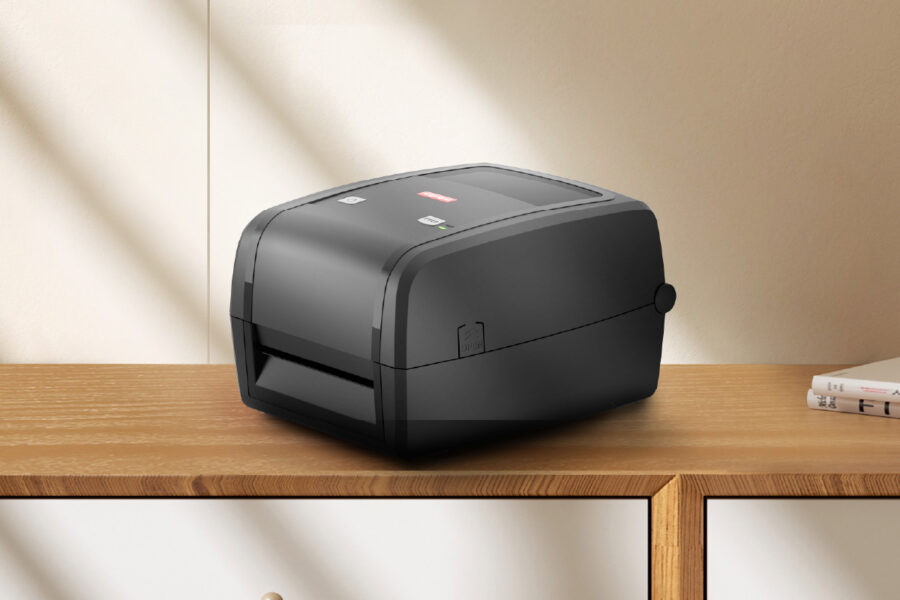

MP4000D Desktop Printer:
The New Standard in Versatile Desktop Printing
So, in today’s fast-paced business environment, efficiency, adaptability, and precision are the key factors for Retail.
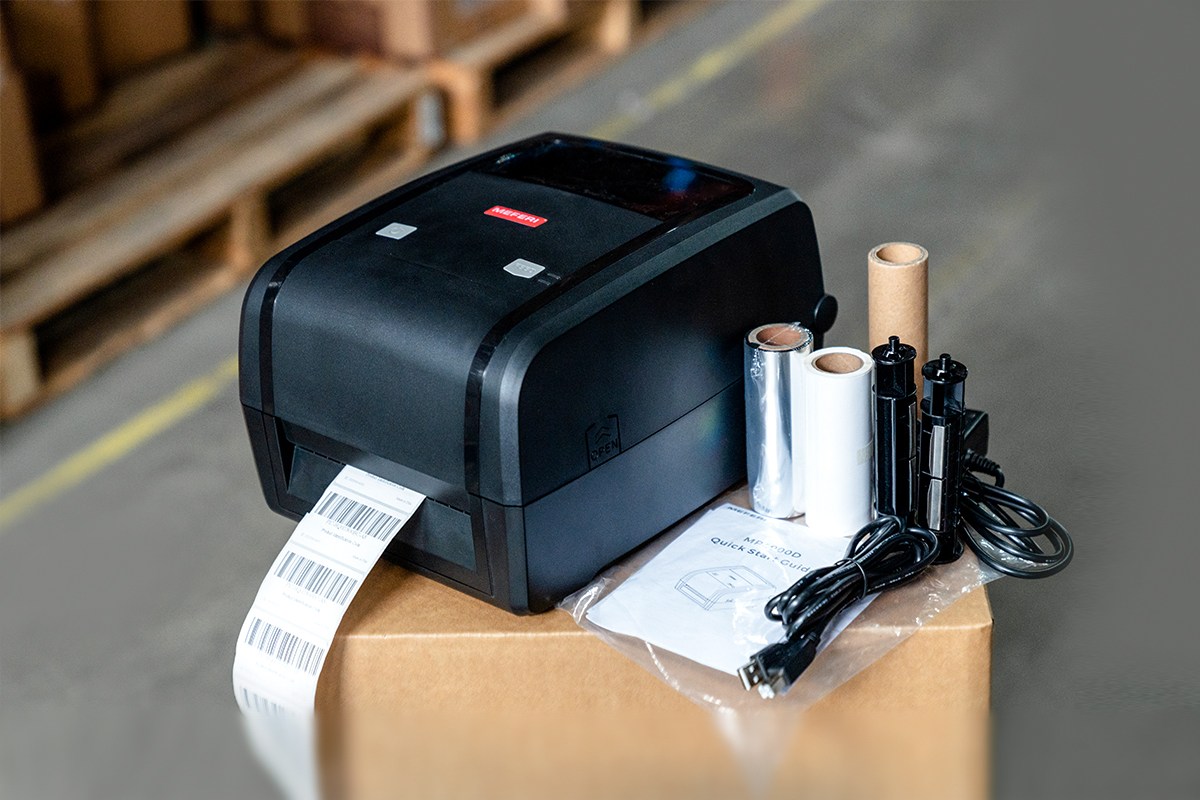
MEFERI MP4000D stands out as a next-generation desktop printer engineered to meet the diverse needs of modern retail, logistics, manufacturing, and service operations. Combining cutting-edge print technology with user-centric design, the MP4000D delivers a powerful blend of flexibility, performance, and reliability.
Dual Technology Excellence:
Direct Thermal & Thermal Transfer
The MP4000D seamlessly operates in both Direct Thermal and Thermal Transfer modes, allowing businesses to select the ideal printing method for every task:
-
-
- Direct Thermal for quick, cost-effective, short-term labels
- Thermal Transfer for crisp, high-durability prints that withstand chemicals, sunlight, moisture, and temperature changes
-
This dual-technology design makes the MP4000D exceptionally versatile — perfect for applications ranging from product labeling to long-life asset tags.
Engineering Designed for Real Workflows:
Quick Slide Fasteners
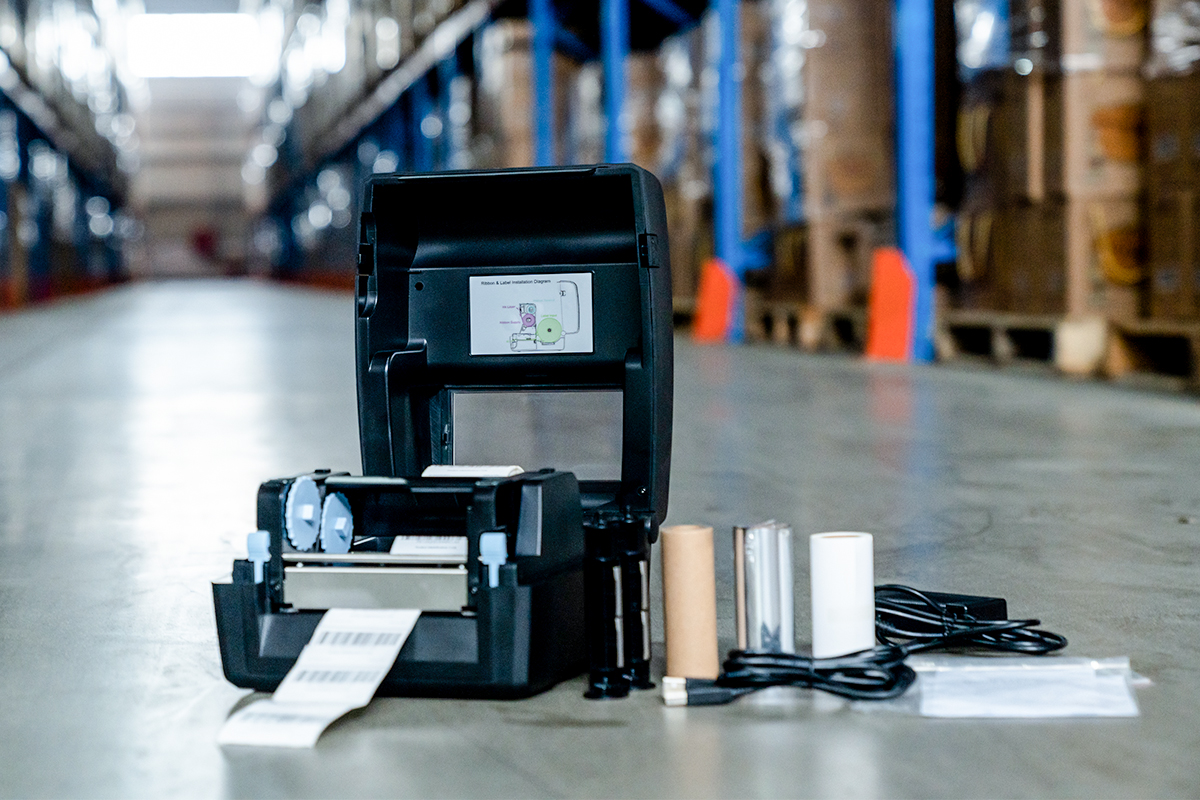
Replacing rolls is effortless thanks to the Quick Slide mechanism, reducing downtime and keeping operations moving smoothly.
Cross-Platform Compatibility
MP4000D supports a wide ecosystem, including Windows, Linux, and Mac, ensuring compatibility wherever it’s deployed.
Large Memory for Complex Jobs
With 128 MB RAM and 128 MB Flash, the printer handles detailed graphics, long print batches, and variable data without delays.
Fast, Crisp Printing
Delivering 203 dpi clarity and high-speed output, the MP4000D ensures barcodes, logos, and text are consistently clean and scannable.
Wide Language Support
It speaks the industry’s key printer languages: EPL, ZPL, TSPL, and DPL, enabling easy integration with existing systems and workflows.
Smart Automation Features:
Hands-Free Label Dispensing
A built-in dispenser/peeler enables print-on-demand workflows — as soon as one label is taken, the next one is automatically prepared.
Automatic Cutter Option
The cutter module ensures precise, clean label separation — particularly valuable for textile labels, tags, and customized shapes.
Versatile Barcode Capability
From standard 1D barcodes to advanced 2D symbologies, the MP4000D ensures compliance, readability, and reliability.
User-Friendly Interaction
Dual LED indicators, audio alerts, and an intuitive interface provide clear, real-time feedback for operators.
Next-Generation Connectivity
Wi-Fi & Bluetooth
Wireless connectivity makes the MP4000D perfect for dynamic retail and warehouse workflows. Send print tasks remotely via Wi-Fi or directly from mobile devices through Bluetooth.
API Integration for Enterprise Workflows
With BarTender REST API support, businesses can send automated print jobs directly from ERP, WMS, MES, and CRM systems — streamlining operations and eliminating manual steps.
MEFERI Printer:
Made for your Real Applications
The MP4000D adapts seamlessly across multiple industries and use cases:
-
-
- Paper and mobile barcode labels
- Production line identification
- Point-of-sale labeling
- Shipping & receiving
- Event registrations
- Visitor check-ins
- Inventory processes and retail stock management
-
MEFERI’s desktop printer lineup is built to deliver maximum value in compact form. Ideal for low to mid-volume workloads, these printers support a wide range of media types and dimensions, making them suitable for:
-
-
- Retail
- Logistics
- Healthcare
- Manufacturing
- Administrative environments
-
They offer intuitive operation, robust construction, optional Wi-Fi/Bluetooth modules, and excellent cost-efficiency — ensuring consistent, dependable performance across all business needs.
MP4000D printer:
Innovation Meets Practical Power!
The MEFERI MP4000D is more than just a printer — it is a comprehensive, adaptable solution engineered to accelerate workflows, enhance accuracy, and minimize operational friction. Whether printing labels, receipts, barcodes, or specialized tags, the MP4000D empowers businesses with the perfect balance of performance and reliability.
MEFERI MP4000D – turning printing challenges into seamless productivity.




Leave a Reply